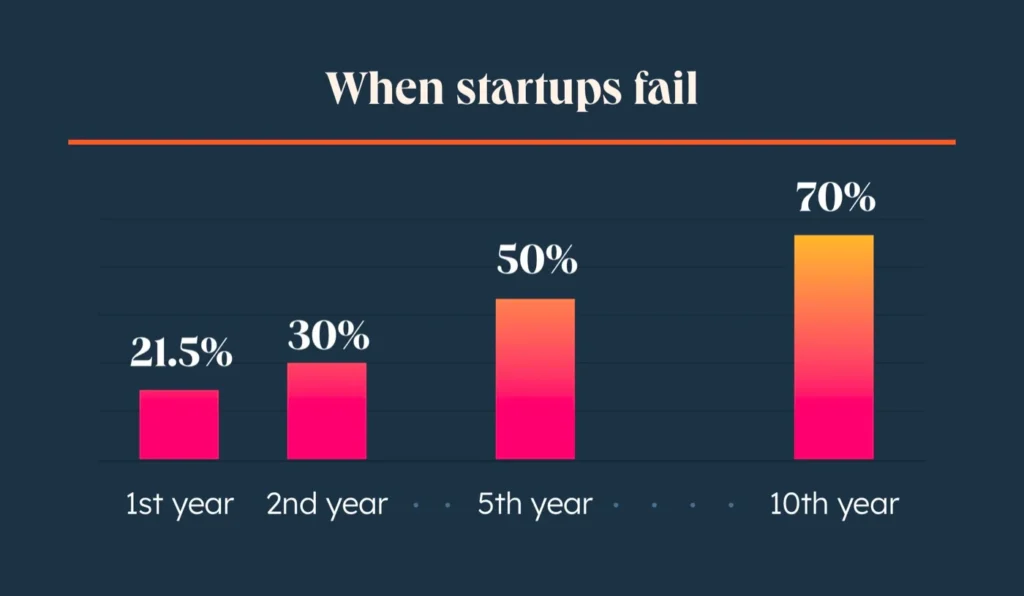
Roughly 90% of startups fail — that number gets thrown around a lot, and honestly, it’s about right. But the reasons startups fail aren’t as mysterious as people think. They repeat, over and over, across industries and countries.
I’ve watched founders make the same mistake three different ways and still be surprised when it caught up with them. Let’s go through what actually kills startups.
The Real Reasons Startups Fail
In short, startups fail most often because they run out of cash, build something nobody wants, get outcompeted, or fall apart due to founder conflict — not because of one dramatic external event.
1. Running Out of Money
This is the number one killer. CB Insights data has consistently shown cash flow problems topping the list of failure reasons for years. Founders underestimate how long it takes to become profitable and overestimate how fast funding comes.
2. No Real Market Need
Building something cool isn’t the same as building something people will pay for. Picture a founder in Bengaluru who spent 8 months building an app nobody asked for — then discovered, after launch, that the market simply wasn’t there. That’s more common than founders like to admit.
3. Getting Outcompeted
Sometimes it’s not that your idea was bad — it’s that someone else executed faster or with more resources. Speed to market and consistent iteration matter more than most first-time founders realize.
4. Founder Conflict
Co-founder breakups quietly kill more startups than people talk about. Unclear roles, unequal effort, and no formal agreement about equity or decision-making create cracks that widen under pressure.
5. Poor Financial Planning
Not tracking burn rate, not knowing your break-even point, not separating personal and business expenses — these small habits compound into big problems fast.
6. Ignoring Customer Feedback
Some founders fall in love with their original idea and refuse to pivot even when customers are clearly telling them something different. Listening isn’t optional.
7. Scaling Too Fast, Too Soon
Hiring a big team or expanding to new cities before the core business model is proven burns cash without adding real value. Growth should follow proof, not hope.
How to Avoid These Mistakes
- Track your runway (cash left ÷ monthly burn) every single month
- Talk to real customers before building, not after
- Put co-founder agreements in writing from day one
- Stay lean until you have consistent revenue
- Treat customer feedback as data, not criticism
A Quick Self-Check
Ask yourself honestly: do you know your current runway in months? If you can’t answer that in five seconds, that’s a warning sign worth addressing today.
FAQs
What percentage of startups actually fail? Commonly cited estimates put it around 90% within the first few years, though this varies by industry and definition of “failure.”
Is running out of money the biggest reason startups fail? It’s consistently ranked as the top reason in most startup failure studies, often tied closely to poor financial planning.
Can a startup recover after almost failing? Yes — many successful companies pivoted after nearly running out of money or losing product-market fit early on.
How important are co-founder agreements? Very. Unclear equity and role splits are a common, avoidable cause of startup collapse.
Does a good idea guarantee startup success? No. Execution, timing, and market need usually matter more than the idea itself.
Conclusion
Startups fail for predictable, repeatable reasons — running out of cash, ignoring the market, founder conflict, or scaling too early. None of these are unavoidable. Track your numbers, talk to real customers, and put agreements in writing before problems show up. If you’re building something right now, take ten minutes today to check your runway — it might be the most useful thing you do this week.