Water is part of nearly every daily routine, from making the first cup of coffee in the morning to washing vegetables, filling a water bottle, and preparing dinner. Yet many people rarely think about its quality until something seems wrong. Maybe the tap water has an unusual taste, cloudy ice cubes, or white marks keep appearing on the kitchen faucet. Sometimes, the problem isn’t obvious at all.
The good news is that improving household water doesn’t always require a complicated installation or a complete plumbing overhaul. Understanding the available treatment options, knowing what is actually in your water, and choosing equipment that suits your household can make a noticeable difference. A little research at the beginning often saves time, money, and frustration later.
Start With Your Water, Not the Equipment
It’s tempting to buy a filtration product after reading a few reviews or hearing a neighbor recommend one. However, water quality varies considerably between locations, and even two homes in the same neighborhood may have different plumbing conditions.
Municipal water systems generally treat water to meet applicable drinking water standards, but its taste and characteristics can change as it travels through distribution pipes and household plumbing. Private wells present another set of considerations because their quality depends on local geology, nearby activities, and the condition of the well itself.
A water test can help identify concerns such as hardness, iron, manganese, nitrate, or certain contaminants. The appropriate test depends on your water source and the issues you want to investigate. If you’re concerned about a specific contaminant, ask a qualified laboratory to test for it rather than relying on a general screening alone.
Testing also helps avoid unnecessary purchases. There’s little reason to install equipment for a problem your household doesn’t have, particularly when some systems require regular maintenance and replacement parts.
Understanding Filtration for Drinking Water
Taste is often the first thing people notice when they begin looking for better water. Chlorine, naturally occurring minerals, sediment, and other substances can affect how tap water smells or tastes. Different filtration technologies address different concerns, so choosing the right one matters more than buying the most expensive model.
For households looking to improve water at the kitchen sink, reverse osmosis systems / drinking water solutions are worth understanding. Reverse osmosis uses pressure to move water through a semipermeable membrane, reducing many dissolved substances and other impurities. Depending on the system’s design and certification, it may reduce certain contaminants such as lead, arsenic, nitrate, and dissolved salts.
These systems are commonly installed beneath the sink and connected to a dedicated drinking-water faucet. Some include additional carbon filtration to improve taste and protect the membrane. They’re particularly useful when water testing identifies dissolved contaminants that a basic carbon filter may not adequately reduce.
Still, reverse osmosis isn’t automatically the best answer for every home. Systems can produce wastewater, require periodic filter changes, and need appropriate water pressure. Before purchasing one, check its independently verified contaminant-reduction claims and compare them with your actual water test results.
A Modern Option: Tankless Filtration
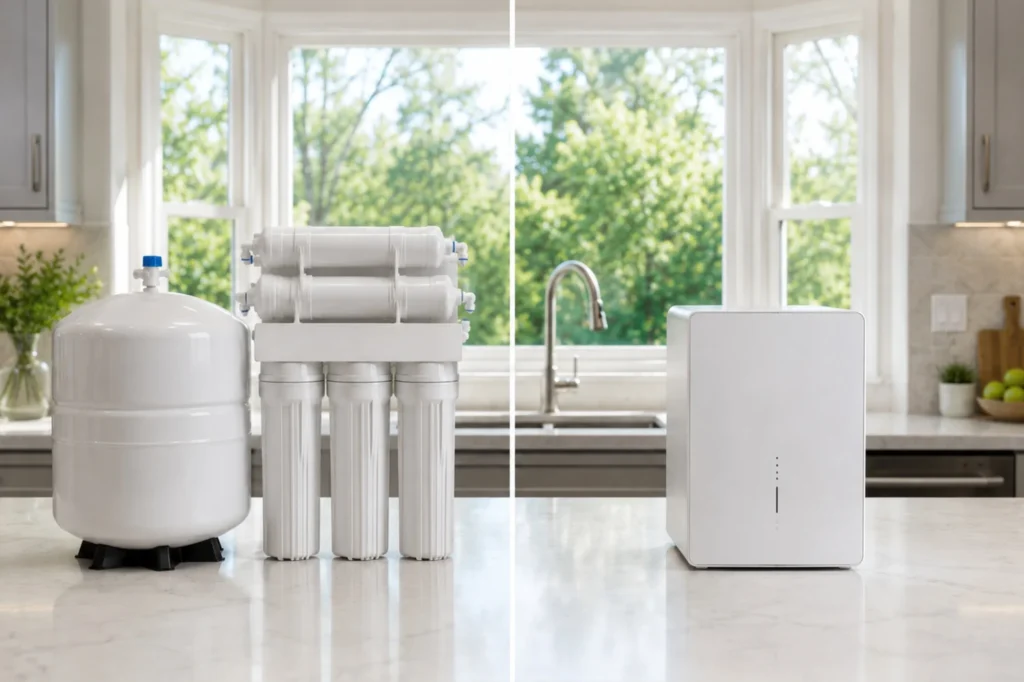
Traditional reverse osmosis systems often include a storage tank that holds treated water until someone opens the faucet. This arrangement works well for many households, although the tank occupies valuable cabinet space and can limit how much room remains for cleaning supplies or other kitchen essentials.
A tankless RO system takes a different approach by filtering water as it is needed, using a design that typically removes the need for a separate storage tank. For homeowners with compact kitchens, this can be a practical advantage. The streamlined setup may also provide a cleaner appearance beneath the sink.
Some tankless models offer higher production rates, smart filter-life indicators, and convenient monitoring features. However, performance varies by manufacturer and model. A tankless unit may depend on electricity, and its actual flow rate can change with water pressure, temperature, and the condition of its filters.
Consider how your household uses water throughout the day. A couple who mainly fills glasses and prepares coffee may have different needs from a family that frequently fills large pots or several bottles at once. Compare the rated production capacity, dispensing flow, wastewater ratio, replacement-filter cost, and warranty before making a decision.
What About Hard Water?
Hard water contains elevated levels of minerals, especially calcium and magnesium. These minerals aren’t usually a health concern at typical household levels, but they can create practical headaches. Soap may not lather easily, shower doors develop stubborn spots, and kettles or heating elements accumulate scale over time.
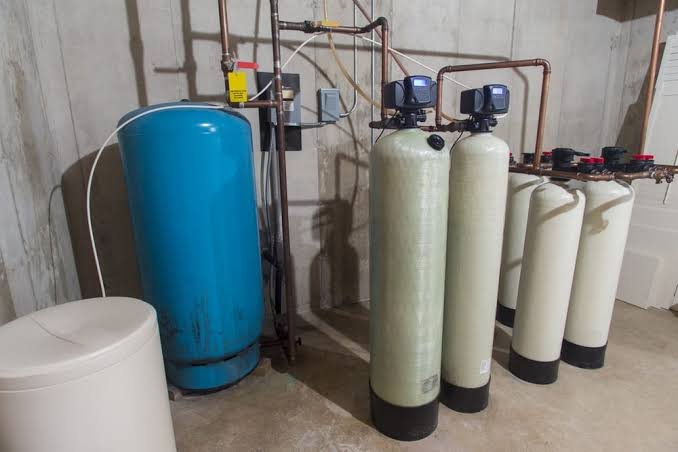
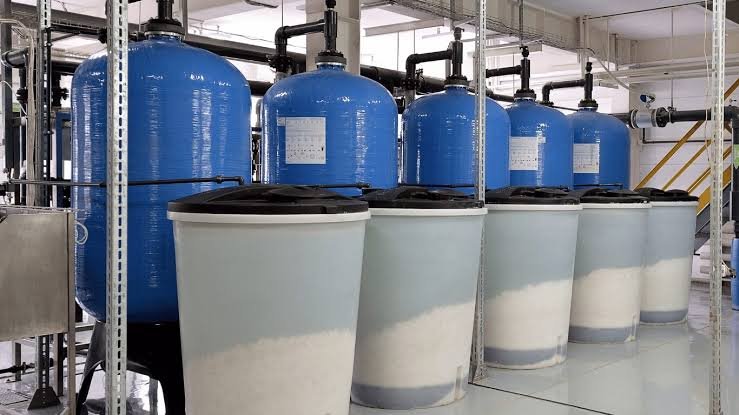
Conventional water softeners generally use ion exchange to reduce hardness. They can help protect plumbing fixtures and improve the feel of water during bathing and washing. However, they may require salt replenishment, regeneration, and occasional servicing. The right setup depends on water hardness, household consumption, and any plumbing or wastewater restrictions.
For people who want to reduce scale without a traditional salt-based softener, salt-free water systems may be another option. These systems use different technologies, including certain scale-conditioning methods, to change how hardness minerals behave. Some can help limit hard scale on surfaces, but they generally don’t remove calcium and magnesium in the same way a conventional softener does.
That distinction is important. If your main goal is to reduce scale formation, a conditioning system may be worth evaluating. If you want to lower measured hardness or achieve the familiar effects of softened water, ask whether the system can deliver that specific result. No single technology solves every hard-water problem.
Look Beyond the Purchase Price
Equipment costs are only one part of owning a water treatment system. Filters need replacing, membranes have finite service lives, and some installations require professional plumbing work. A low-cost unit may become expensive if replacement cartridges are difficult to find or cost more than expected.
Before committing, ask for a clear estimate that includes installation, routine maintenance, replacement components, and any ongoing service fees. Check whether the manufacturer offers readily available parts and explains how to maintain the equipment. If a company provides servicing, find out what the visit includes and whether emergency repairs are available.
Certifications also deserve attention. For drinking-water equipment, look for independent certification to standards relevant to the contaminants or performance claims involved. A product that reduces chlorine taste, for example, shouldn’t automatically be assumed to reduce lead or other dissolved substances.
It’s equally sensible to review your household’s needs over time. A growing family, a renovated kitchen, or a change from municipal water to a private well may alter which treatment setup makes the most sense.
Maintenance Is Part of Water Quality
Even well-designed equipment needs care. Filters can become exhausted, membranes may lose performance, and neglected components can affect water flow or taste. Follow the manufacturer’s replacement schedule, but also pay attention to changes such as unusual odors, slower dispensing, or persistent leaks.
Keep a simple record of installation dates, filter replacements, and service visits. It doesn’t need to be elaborate; a note on your phone is often enough. If your system includes a filter-life indicator, remember that it estimates replacement timing and may not directly measure the quality of the water coming out.
For private wells, continue the recommended water testing schedule even when treatment equipment is installed. A functioning filter doesn’t eliminate the need to monitor the original water source.
Making a Confident Choice
Better household water begins with a clear understanding of what you want to improve. Perhaps you need better-tasting drinking water, fewer mineral deposits, or a practical filtration setup that fits into a small kitchen. Each goal points toward a different solution, and sometimes a combination of technologies is appropriate.
Start with reliable testing, compare equipment based on verified performance, and consider the long-term cost of ownership rather than focusing only on the initial price. Ask questions when product claims seem vague, and don’t assume that one device can address every possible water concern.
Ultimately, the best treatment system is the one that suits your water, your home, and your everyday habits. When those pieces fit together, water treatment becomes less of a guessing game and more of a sensible investment in a comfortable, well-maintained household.