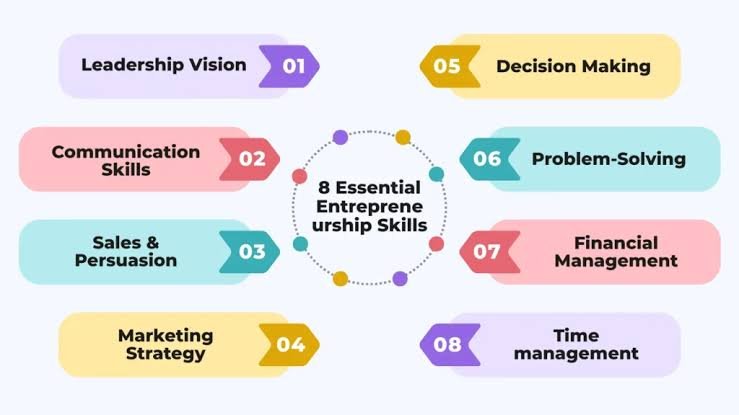
People love asking “what entrepreneur skills do I need to succeed?” as if there’s a checklist you tick off and then you’re ready. There isn’t. But there are a handful of skills that show up again and again in founders who actually make it.
I’ve noticed something interesting over the years — the founders who last aren’t always the smartest ones in the room. They’re usually the most adaptable.
The Skills That Actually Matter
Quick answer: the most important entrepreneur skills are decision-making under uncertainty, basic financial literacy, sales ability, resilience, and the discipline to keep learning — technical skills can be hired, these usually can’t.
1. Decision-Making With Incomplete Information
You’ll rarely have all the data you want. Waiting for certainty is a luxury most founders don’t have. The skill is making a reasonable call quickly, then adjusting if you’re wrong.
2. Basic Financial Literacy
You don’t need to be an accountant, but you do need to read a profit and loss statement, understand cash flow, and know your break-even point. Founders who ignore this often get blindsided by problems that were visible in the numbers for months.
3. Sales Ability
Every founder is a salesperson, whether they admit it or not — selling to customers, investors, and even to their own team on the vision. If selling makes you uncomfortable, that discomfort is worth working through early.
4. Resilience
Things will go wrong. Repeatedly. The founders who last aren’t the ones who avoid setbacks — they’re the ones who recover from them faster than most.
5. Communication
Explaining your idea clearly to a customer, investor, or new hire is a skill, not a talent you’re born with. Practice it the way you’d practice any other skill.
6. Time Management and Prioritization
There’s always more to do than time allows. Knowing which three tasks actually move the business forward — and ignoring the rest for now — is what separates busy founders from productive ones.
7. Adaptability
Markets shift, competitors show up, customer needs change. Rigid founders who refuse to adjust their approach tend to get left behind by ones who stay flexible.
8. Networking
Building genuine relationships — with mentors, other founders, potential hires — pays off in ways that are hard to predict but very real. Most opportunities I’ve seen come through connections, not cold applications.
How to Build These Skills If You Don’t Have Them Yet
- Read one book on business finance if numbers scare you
- Practice your pitch on strangers, not just friends
- Join a local founder community or WhatsApp group
- Track a small failure each month and write down what you’d do differently
Which of these skills feels weakest for you right now? That’s usually the one worth working on first.
FAQs
Can entrepreneur skills be learned, or are they natural talent? Most can be learned with practice — sales, financial literacy, and communication especially. Natural traits like risk tolerance help but aren’t everything.
What’s the most underrated entrepreneur skill? Financial literacy. Many founders avoid it because it feels boring, but it prevents some of the most common startup failures.
Do I need a business degree to develop these skills? No. Many successful entrepreneurs learned through direct experience, mentorship, and books rather than formal education.
How important is networking for entrepreneurs? Very important — many deals, hires, and opportunities come through relationships rather than cold outreach.
What skill should a first-time entrepreneur focus on first? Basic financial literacy and sales ability tend to have the fastest, most direct impact on survival.
Conclusion
Entrepreneur skills aren’t fixed traits — they’re built through deliberate practice, mistakes, and repetition. Focus on decision-making, financial literacy, sales, and resilience first; everything else can be hired or learned along the way. Pick the one skill from this list that scares you most, and spend 30 minutes this week getting a little better at it.